Why Sleep Isn’t a Technique — It’s a Rhythm
A conversation with Miss Meg on rhythm, nervous systems, and learning to rest across all ages
TL;DR — If You’re Short on Time
Sleep isn’t something we fix at night — it’s something that emerges when the nervous system feels safe.
In this conversation with Miss Meg, we explore how rhythm, regulation, and everyday interactions shape rest across all ages. From babies to adults, sleep reflects how well the body has been supported throughout the day — through predictability, connection, digestion, and the ability to settle without urgency. When regulation leads and rhythm follows, rest becomes available — gently, naturally, and without force.
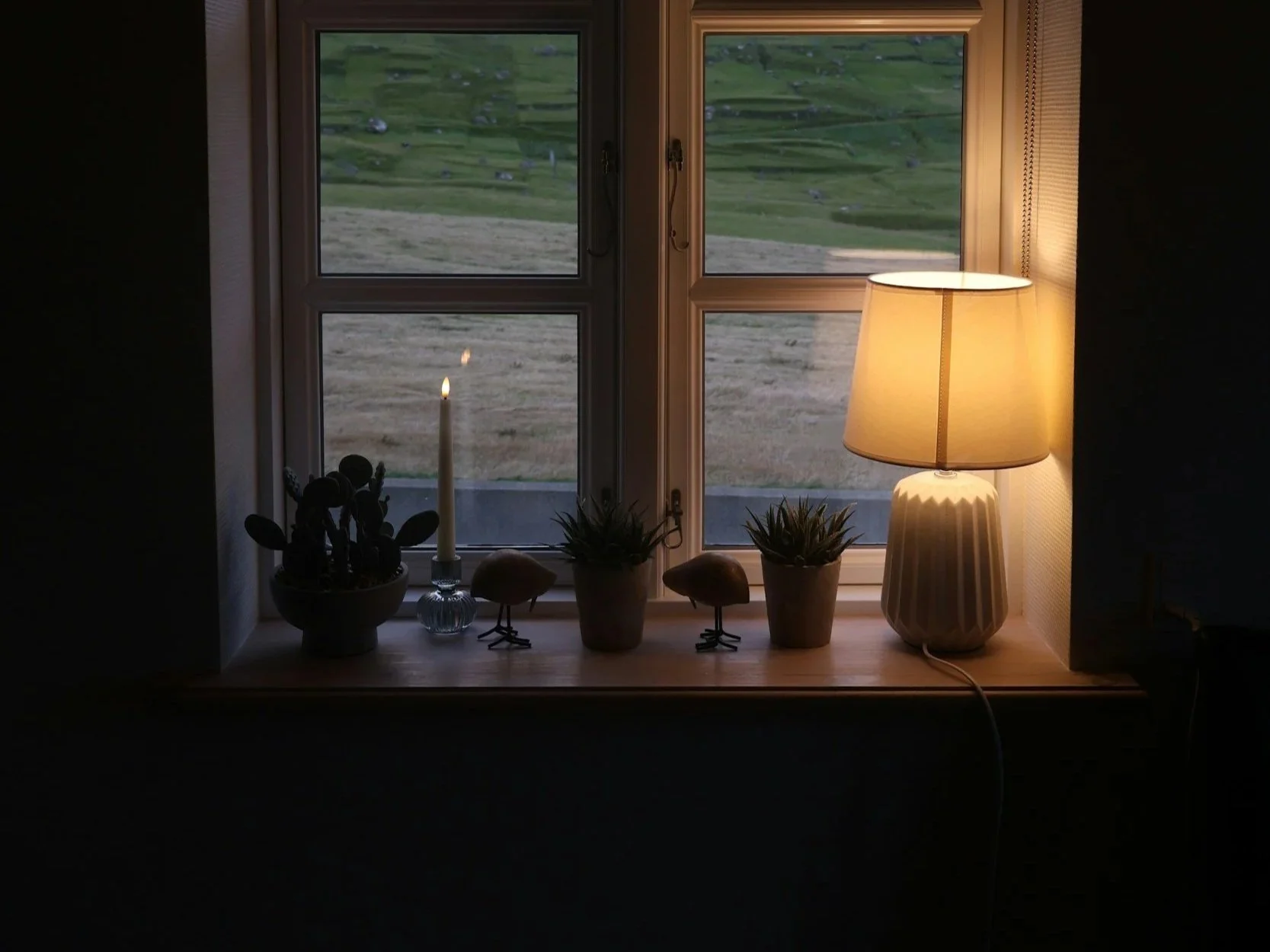
unsplash by Mariia M @mariiam07
Prefer to listen?
You can press play below to hear this episode of Rooted in the Seasons, or scroll down to read the blog post.
When Sleep Is the Symptom, Not the Problem
This blog post is based on a recent episode of Rooted in the Seasons — a conversation that began with sleep, and very quickly widened into something much deeper.
What started as a discussion about babies and bedtime became a reflection on nervous systems, rhythm, and how we learn (or don’t learn) to rest — not just in childhood, but across a lifetime. Because sleep, as it turns out, is rarely the problem in itself. More often, it’s a signal. A symptom. A quiet message from the body that something earlier in the day — or much earlier in life — hasn’t quite been met.
In this episode, I’m joined by Miss Meg, founder of Infinite Connection Academy and creator of the Whole Family Regulation method. Rather than offering sleep techniques or routines to follow, our conversation explored what needs to be in place before sleep can happen naturally: safety, predictability, connection, and rhythm.
At one point, Meg summed up her work with a simple line that stayed with me long after the recording ended:
“Remember… when regulation leads and rhythm follows, rest always becomes available.”
That sentence alone captures so much of what we explored — and why this conversation feels relevant not only for parents of young children, but for anyone who struggles to truly switch off at the end of the day.
Sleep as a Felt Experience of Safety
One of the central themes of our conversation was a reframe that challenges much of how sleep is usually discussed.
Rather than seeing sleep as something we make happen — through routines, rules, or willpower — Meg describes sleep as a felt experience of safety. Something the body does naturally when the conditions are right.
This idea applies very clearly to babies and children, whose nervous systems are still forming and rely heavily on the adults around them for regulation. But as we talked, it became obvious that the same principle applies to adults, too.
As I reflected on this conversation afterwards, I was reminded of something I see often in my own work. Many women are doing everything “right” on the surface — eating well, moving their bodies, trying to wind down in the evening — and still find themselves lying awake, waking in the early hours, or feeling tired even after a full night in bed.
When sleep is approached purely as a nighttime activity, it can easily start to feel frustrating, or even like a personal failure.
But when we begin to see sleep as the body’s response to safety, the picture changes.
Safety isn’t just about what happens at bedtime. It’s shaped throughout the day, by how rushed we feel, how much stimulation we take in, how predictable our rhythms are, and whether our nervous system ever gets the message that it’s okay to soften and let go.
In the conversation, Meg spoke about how easily well-intentioned adults can unintentionally communicate a lack of safety — especially at vulnerable moments like bedtime — not through anything dramatic, but through subtle signals of urgency, worry, or rescue. She gave simple examples: immediately picking a child up when they cry and telling them they’re only safe in someone’s arms, repeatedly offering “one more” reassurance at bedtime, or using language that introduces fear before a child has even named it themselves.
Over time, these small, everyday patterns can teach a nervous system to stay alert rather than settle.
What struck me most was how compassionate this view is. It moves us away from blame — of ourselves, our children, or our bodies — and instead invites curiosity. If sleep isn’t coming easily, what might the system still be holding? And what would help regulation lead, so that rhythm — and eventually rest — can follow?
Why Rhythm Matters More Than Bedtime
One of the clearest threads running through this conversation was the reminder that sleep doesn’t begin at night.
Both Meg’s work and Ayurveda point to the same underlying principle: what happens during the day shapes what happens when we lie down to rest. Bedtime is not a standalone event — it’s the final moment in a much longer sequence of inputs, transitions, and demands on the nervous system.
In the episode, we spoke about how easily days can become crowded with stimulation. For babies and children this might look like constant movement, noise, and transitions without enough time to process what’s been taken in. For adults, it often shows up as back-to-back responsibilities, screen time late into the evening, irregular meals, or moving from one task straight into the next without pause.
From an Ayurvedic perspective, this makes complete sense. Sleep is one of the three pillars of health, but it’s never viewed in isolation. It’s shaped by digestion, timing, sensory input, and rhythm across the whole day. Not just what we eat, but when we eat. Not just how busy we are, but whether there are moments of decompression woven in between.
During the conversation, Meg spoke about the importance of helping the nervous system “digest” the day — not only food, but experiences, emotions, sounds, and impressions. Without this processing time, the body may arrive at bedtime already overstimulated or depleted, making it much harder to settle.
This is where rhythm becomes so important.
Rhythm isn’t about rigid schedules or perfect routines. It’s about predictability and flow — enough consistency for the nervous system to know what’s coming next, and enough spaciousness to transition from one state to another. When days have a recognisable shape, bedtime stops feeling abrupt. The body isn’t asked to suddenly switch off from high alert; it’s gently guided there.
Seen this way, sleep becomes less about what we do at night and more about how supported the system feels long before we reach the bed.
This idea, that rest begins long before bedtime, is something I explore more deeply in my Stress Less, Live More course. We look at how rhythm, digestion, nervous system support, and simple daily anchors work together to help the body feel safe enough to truly rest, without rigid routines or pressure to “do it right.”
I’ve written more about how Ayurveda understands sleep — including dosha-specific patterns, timing, and food — in this earlier post on getting a good night’s sleep with Ayurveda.
Responding Instead of Rescuing
Another important distinction that emerged during the conversation was the difference between responding and rescuing.
At first glance, these can look very similar. Both come from care. Both are driven by a desire to help. But they land very differently in the nervous system — whether we’re talking about a child at bedtime or an adult under pressure.
Meg spoke about how, especially at vulnerable moments like bedtime, adults can feel a reflexive urge to rescue discomfort — and how this can unintentionally communicate something important to the nervous system: that the current situation is not safe without immediate intervention. A cry, a protest, or a moment of distress can trigger our own unease, leading us to step in quickly, soften boundaries, or try to remove the feeling altogether.
Responding, by contrast, keeps the connection while allowing space for the experience. It communicates: I’m here, I see you, and I trust your capacity to move through this — with support. Rescuing, however unintentionally, can communicate something else: this feeling is too much, and you can’t handle it without me fixing it for you.
In the episode, this showed up most clearly in bedtime dynamics. Repeatedly stepping in with “one more cuddle,” “one more reassurance,” or immediate physical intervention can calm things in the moment, but over time it may teach a nervous system to stay alert — always watching for the next rescue, rather than settling into safety.
What’s striking is how familiar this pattern feels beyond parenting.
Many adults live in a constant state of self-rescue: pushing through fatigue, overriding signals of hunger or rest, filling every quiet moment, or trying to soothe discomfort as quickly as possible. We respond to stress by doing more, fixing faster, or numbing out — rather than allowing the system to process and recalibrate.
Seen through this lens, responding instead of rescuing becomes a wider life skill. It asks for presence, patience, and trust — in ourselves as much as in others. And when regulation leads, rescue becomes less necessary.
The Nervous System Never Ages Out
One of the most reassuring — and quietly radical — ideas to emerge from this conversation was the reminder that the nervous system never “ages out” of regulation.
We often assume that once childhood is over, patterns around sleep, stress, and emotional response should simply resolve on their own. If rest feels difficult in adulthood, it’s easy to believe something is wrong — that we should be able to cope better, switch off more easily, or handle life without so much effort.
But the nervous system doesn’t work like that.
The patterns we form early — around safety, rhythm, and responsiveness — don’t disappear as we grow older. They adapt.
In yoga, these imprints are described as samskaras — patterns laid down through repeated experience, not as flaws to fix, but as pathways that can soften and transform when awareness and support are present.
What looks like an adult sleep issue often has its roots in much earlier experiences of how stress, comfort, and regulation were met. Difficulty switching off at night, waking in the early hours, feeling wired despite exhaustion, or needing constant distraction to relax are not signs of failure — they are expressions of a system doing what it learned to do.
Rather than pathologising these patterns, this perspective offers compassion. The nervous system learned what it needed to survive — and it’s been repeating that strategy ever since.
This is why the work of regulation matters at every stage of life.
For parents, it offers reassurance that it’s never too late to shift patterns — either for their children or for themselves. For those whose children are already grown, it opens a different doorway: the possibility that rest can still be relearned, gently, without forcing or fixing.
Learning to rest is not a developmental milestone we either pass or fail. It’s an ongoing relationship with the nervous system — one that can soften and change at any point.
“When regulation leads, and rhythm follows, rest always becomes available.”
— Miss Meg
Small Anchors That Support Rest — Across All Ages
Toward the end of our conversation, we spoke about how this work doesn’t need to be complicated. Regulation isn’t built through big interventions, but through small, consistent anchors that meet the nervous system where it is.
Rather than offering a long list, these are a few simple entry points — one for each stage — that can be explored straight away.
During pregnancy
Begin with the breath. Taking a few moments each day to consciously slow the breath — even just a handful of deep, steady breaths — helps imprint a sense of safety and calm in both the body and the developing nervous system.
With babies and young children
Pause before rescuing. When distress arises, staying close, present, and calm before intervening immediately can communicate safety without urgency. Sometimes the nervous system needs steadiness more than action.
With older children
Create small, intentional moments of undivided connection — and make them visible. Meg shared the practice of taking photos during special parent–child time and collecting them in a simple album. Over time, this gives children something tangible to return to, helping them remember not just individual moments, but the ongoing experience of being met and valued.
For adults
Notice how the day ends. Rather than focusing only on bedtime, look at the transition into evening. Even a short pause, a moment outside, or stepping away from stimulation can help signal that it’s safe to slow down.
Each of these is less about fixing sleep and more about supporting the conditions that allow rest to emerge.
As Miss Meg put it so simply during our conversation:
“When regulation leads and rhythm follows, rest always becomes available.”
If you’d like support in building a morning and evening rhythm that actually works for your life and nervous system, we go deeper into this inside Stress Less, Live More.
Final Thoughts
If this reflection resonates, you can listen to the full conversation in the latest episode of Rooted in the Seasons. We explore these ideas in more depth — through lived examples, different life stages, and the shared understanding that rest is something we can return to, again and again, when rhythm and regulation are gently supported.
FAQs
Is this episode only relevant if I have young children?
No. While the conversation includes examples from baby and child sleep, the core theme is nervous system regulation — something that applies at every stage of life. Many adult sleep struggles reflect patterns that formed much earlier and can still soften and change.
What does it mean to say “sleep is a felt experience of safety”?
It means sleep isn’t something we make happen through effort or control. The body settles into rest when it feels safe enough to do so — physically, emotionally, and neurologically. This sense of safety is shaped throughout the day, not just at bedtime.
How is rhythm different from routine?
Routine often implies rigidity. Rhythm is about flow and predictability — knowing what comes next without forcing it. Rhythm supports the nervous system by allowing smoother transitions between activity and rest.
What does “responding instead of rescuing” actually look like?
Responding means staying present and supportive without immediately trying to remove discomfort. Rescuing, even when well-intentioned, can unintentionally signal that a situation is unsafe. Over time, this can keep the nervous system on alert rather than allowing it to settle.
How does yoga relate to this?
Yoga describes long-held patterns as samskaras — imprints formed through repeated experience. These aren’t flaws or failures, but pathways that can soften with awareness, rhythm, and support. This mirrors modern nervous system understanding closely.
What’s one simple place to start?
Rather than changing bedtime, notice the transition into evening. Is there any pause between doing and resting? Even a small moment of decompression can help the nervous system shift toward sleep.