A Winter Breath Guide: Creating Space, Calm, and Steadiness in the Season of Vata
TL;DR
Winter Breathing at a Glance
Winter increases Vata, which can affect the nervous system, breath, and digestion
Shallow breathing and tension often show up as restlessness, poor sleep, and irregular digestion
Before using breathing techniques, it helps to create space in the body
Gentle movements like bridge pose, side bends, and fish pose support the breathing spaces from bottom to top
The three-part breath is the foundation for all other breathing practices
From this base:
Ujjayi can support warmth and inner strength
Brahmari can calm and reassure the nervous system
In winter, breathing works best when it’s gentle, steady, and responsive, not forced
Prefer to listen?
You can press play below to hear this episode of Rooted in the Seasons, or scroll down to read the blog post.
Winter invites us to slow down, but for many of us, it doesn’t feel that way at all.
Instead, this season often brings restlessness, shallow breathing, disturbed sleep, and irregular digestion.
From an Ayurvedic perspective, this makes sense. Winter carries strong Vata qualities: cold, dry, and mobile. These qualities don’t just affect the weather; they influence the nervous system, the breath, and the digestive fire as well.
Breathing practices can be deeply supportive in winter, but how we approach them matters. Rather than jumping straight into technique, it helps to create space in the body first, establish a steady foundation, and then choose the breath that best meets us where we are.
This guide explores how to work with breath intelligently in winter, slowly, progressively, and with the nervous system in mind.
Winter, the Nervous System, and the Breath
When Vata is high, the nervous system often leans toward alertness rather than rest. Thoughts become busy, the body feels unsettled, and breathing tends to move higher into the chest.
Because the breath sits at the intersection of body and mind, it’s one of the most effective ways to restore steadiness, but only when the body feels supported enough to receive it.
Before working with specific breathing techniques, it’s worth looking at where the breath can move and where it currently feels restricted.
Feeling Scattered?
You can download my free guide: My 5 Quick Ayurvedic Fixes to Move from Scattered to Steady.
If you wonder where to start, this is a good place.
Breathing and Digestion in Winter
One of Vata’s effects we don’t talk about so often is irregular digestion. Appetite may fluctuate, the belly can feel tense or bloated, and constipation is common.
Breathing plays a direct role here.
Shallow, chest-based breathing doesn’t utilise the natural movement of the diaphragm. When the diaphragm doesn’t move fully, the abdominal organs don’t receive their gentle massage, and the nervous system remains in a more guarded state. Digestion, which depends on rhythm and relaxation, struggles under these conditions.
Deep diaphragmatic breathing helps to:
stimulate the parasympathetic nervous system
encourage natural gut movement
bring warmth and softness back into the belly
In winter, simply restoring the breath to the abdomen can already make a noticeable difference.
Creating Space for the Breath (Bottom Up)
Before practising pranayama, gentle movements can help reopen the breathing spaces. This isn’t about stretching or effort — it’s about making room for the breath to move more freely.
The three-part breath becomes the organising principle here. Each movement supports one breathing area, from the bottom up.
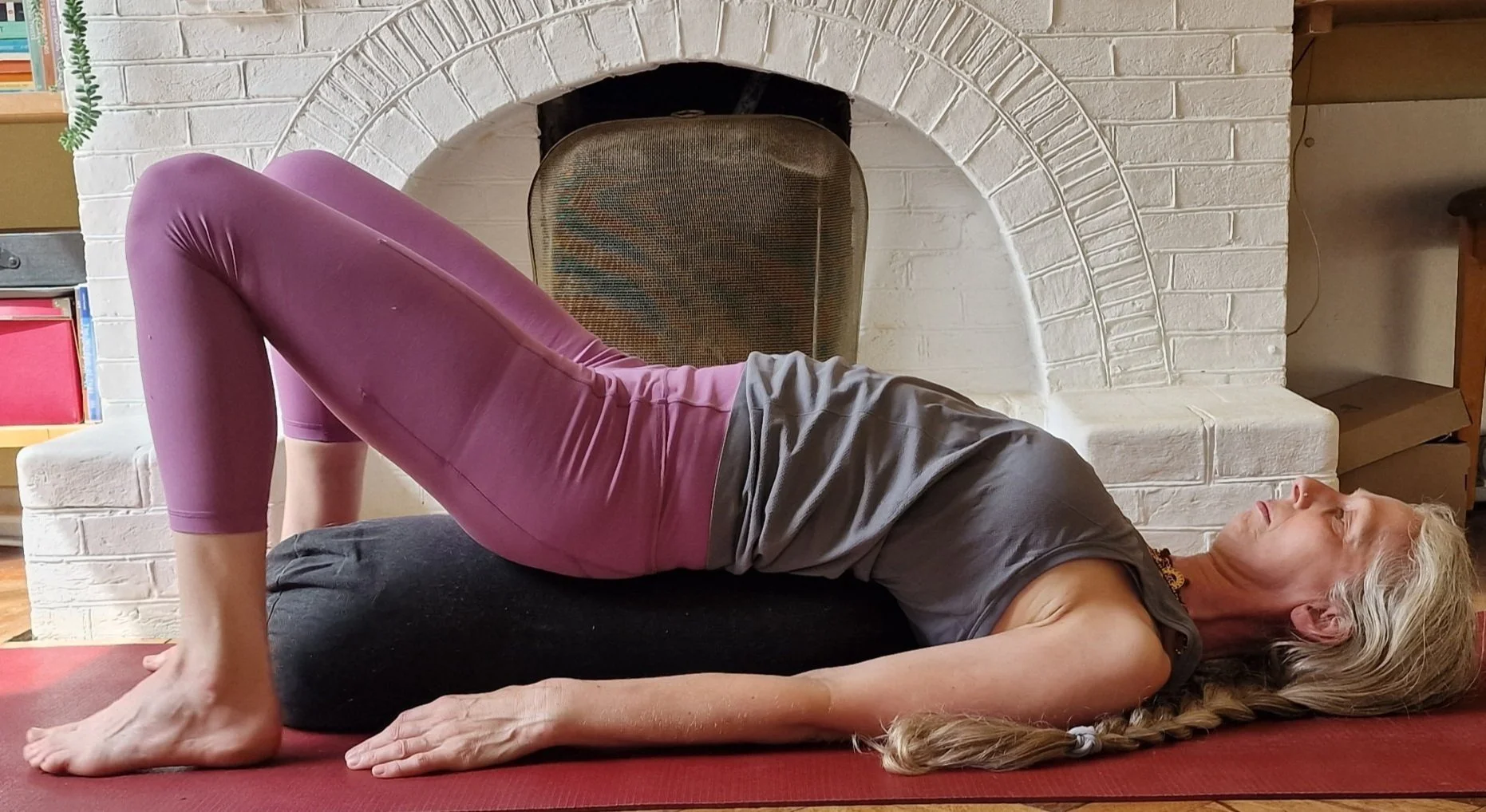
Bridge Pose
Lower Breathing Space (Belly & Diaphragm)
Bridge pose helps open the front of the body and supports movement of the diaphragm.
Practised gently — ideally supported — it encourages the breath to soften into the belly. This can be particularly helpful in winter, when the abdomen often holds tension and digestion feels sluggish.
Resting the hands on the belly and breathing slowly through the nose helps re-establish a sense of containment and rhythm, qualities the nervous system and digestion both respond to.
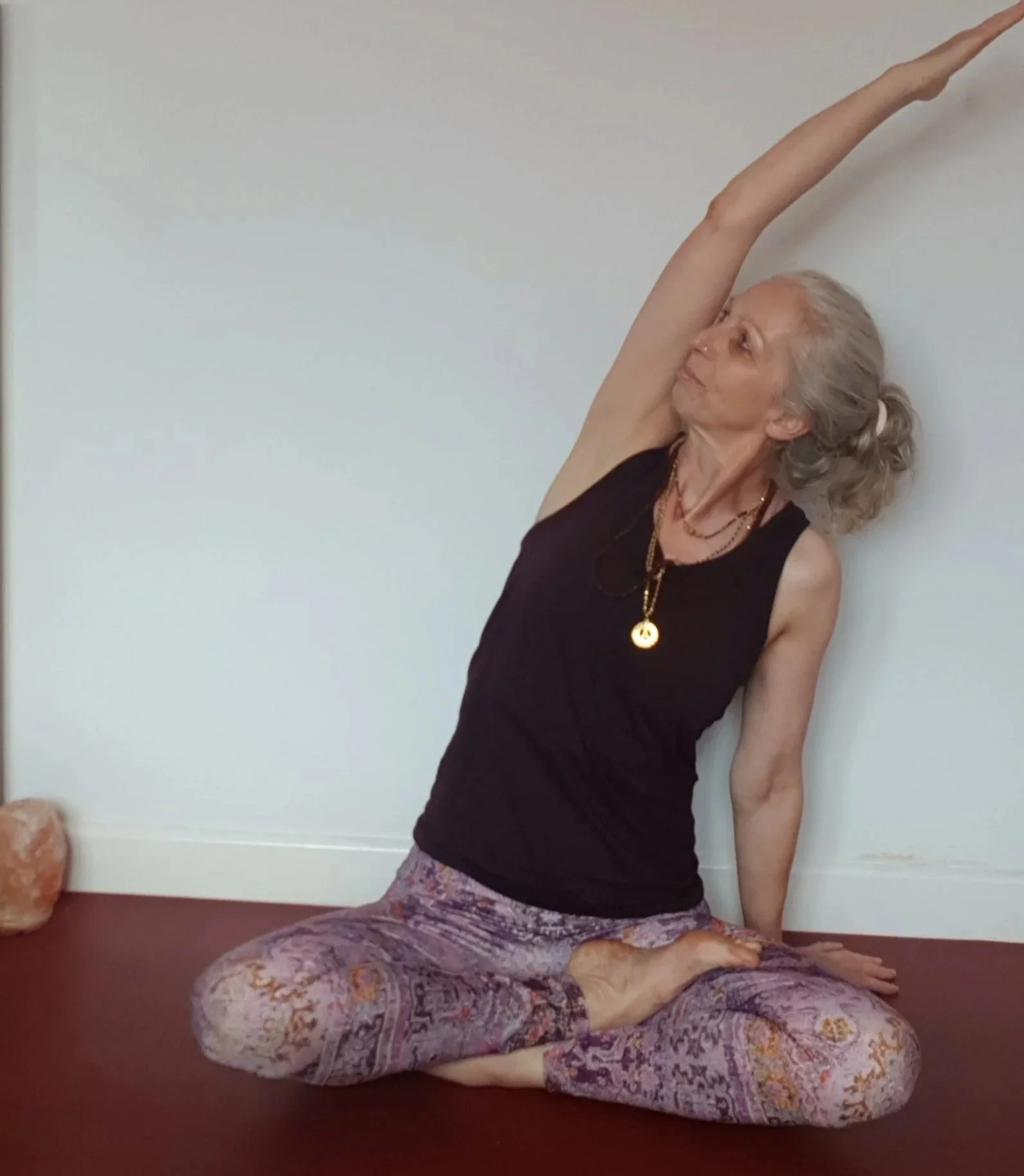
Side Bends - Middle Breathing Space (Ribs)
Seated or supine side bends create space along the sides of the ribcage, an area that often becomes restricted when we’re tired, tense, or overstimulated.
As the ribs begin to move more freely, the breath naturally expands beyond the belly into the middle chest — supporting the second phase of the three-part breath.
The intention here isn’t to stretch deeply, but to allow the breath to gently rediscover lateral movement.
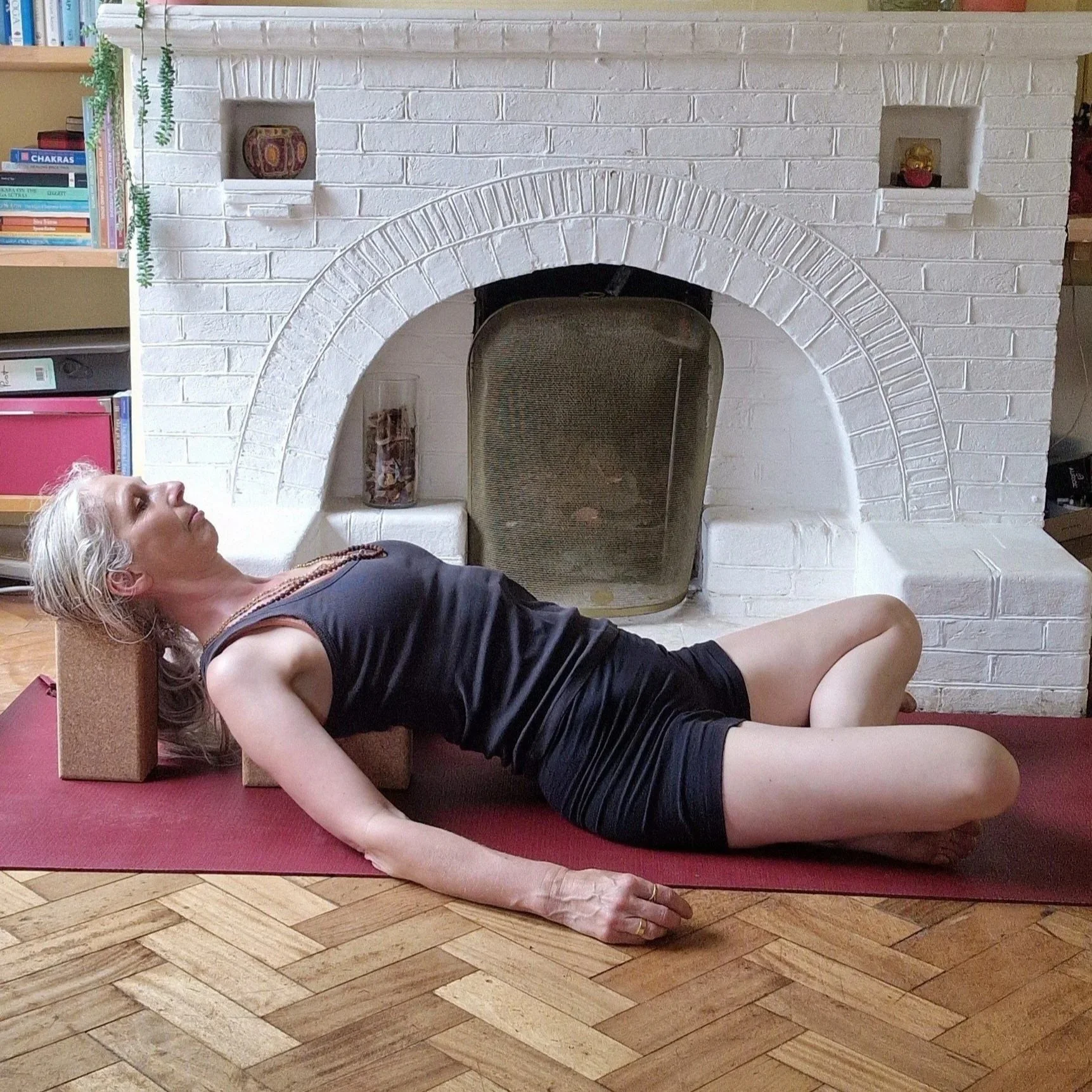
Fish Pose
Upper Breathing Space (Chest & Collarbones)
Fish pose — or a supported, simplified version — helps open the upper chest and collarbones.
Rather than focusing on the full posture, the emphasis is on inviting the breath into the clavicular area with softness and receptivity. This is especially helpful when breathing feels shallow or when there’s a sense of emotional tightness around the heart.
Even without holding the pose, simply directing awareness and breath into this upper space can restore ease and openness.
The Three-Part Breath as the Foundation
Once the breathing spaces are opened, the three-part breath can be practised with much more ease.
Breathing into the belly, ribs, and upper chest — and then exhaling in reverse — creates continuity and a sense of wholeness. In winter, this breath acts less as a technique and more as a home base.
From here, other breathing practices can follow naturally.
I’ve written elsewhere in more detail about the three-part breath and about Nadi Shodhana. Rather than repeating those teachings here, this guide focuses on how to build on that foundation in a seasonal way.
Choosing the Right Breath in Winter
Once the breath feels supported and spacious, specific techniques can be introduced more intentionally.
Ujjayi — Warming and Strengthening
Practised gently, Ujjayi can help build warmth and inner support in winter. It encourages steadiness and confidence, particularly when there’s a sense of depletion or weakness.
Ujjayi is sometimes called the victorious breath. It’s characterised by a soft, steady sound created by gently narrowing the back of the throat, a bit like fogging up a mirror — but with the mouth closed.
The sound is subtle, often described as ocean-like, and it’s present on both the inhale and the exhale. In winter, this quiet quality can help create warmth and containment without pushing the nervous system into effort.
In this season, Ujjayi works best when it’s soft and contained rather than strong or forceful. A few slow rounds are often enough. When used with discernment, it can feel grounding rather than activating.
Brahmari — Soothing and Reassuring
Brahmari has a deeply calming effect on the nervous system. The gentle humming vibration helps soften mental agitation and creates a sense of inner reassurance.
This breath can be especially supportive:
in the evening
before sleep
when the mind feels busy or unsettled
For many people, Brahmari feels less like a technique and more like being gently held — which makes it particularly suited to the depth of winter.
A Seasonal Approach to Breathing
Rather than asking which breathing technique should I do?, winter invites a different question:
What does my body need right now?
By preparing the body, restoring the three-part breath, and then choosing techniques that support warmth, calm, or reassurance, breathing becomes less about control and more about relationship.
In winter, that shift makes all the difference.
FAQs
Which breathing practice is best in winter?
There isn’t one single “best” breath for winter. It depends on how Vata is showing up for you. In general, grounding and steady practices are more supportive than stimulating ones. Establishing the three-part breath first helps you choose more wisely.
Is Ujjayi too activating for winter Vata?
Ujjayi can be activating if practised strongly. Used gently and for short periods, it can actually be grounding and warming, helping to build inner support and confidence during winter.
Why focus so much on the three-part breath?
The three-part breath restores continuity and space in the body. It supports the nervous system, digestion, and emotional steadiness, and it provides a stable base from which other breathing techniques can follow without strain.
How does breathing affect digestion?
Deep, diaphragmatic breathing supports the parasympathetic nervous system and encourages natural movement of the digestive organs. In winter, when digestion can become irregular or sluggish, restoring the breath to the belly can be especially helpful.
Should I practise breathing on its own or with movement?
Both are useful. Gentle movement can help open the breathing spaces first, making breathing practices more effective and more comfortable — particularly in winter, when the body tends to hold tension.
When is the best time of day to practise winter breathing?
Morning and early evening tend to work well. Calming practices like Brahmari are especially supportive later in the day, while gentle Ujjayi may be more suitable earlier when warmth and steadiness are needed.
Further Breathing Resources
If you’d like to explore some of these practices in more depth, you may find these helpful:
Three-Part Yogic Breathing — foundational breath practice
https://www.zestforyoga.com/blog/3-part-yogic-breath-stress-reliefThree-Part Breath Video — guided practice on YouTube
https://youtu.be/-CZNdlThTJg?si=1CHz8zqS52fYoU-hNadi Shodhana (Alternate Nostril Breathing) — calming and balancing breath
https://www.zestforyoga.com/blog/nadi-shodhana-benefits