7 Best Cooling Spices for Summer and Ayurveda Tips
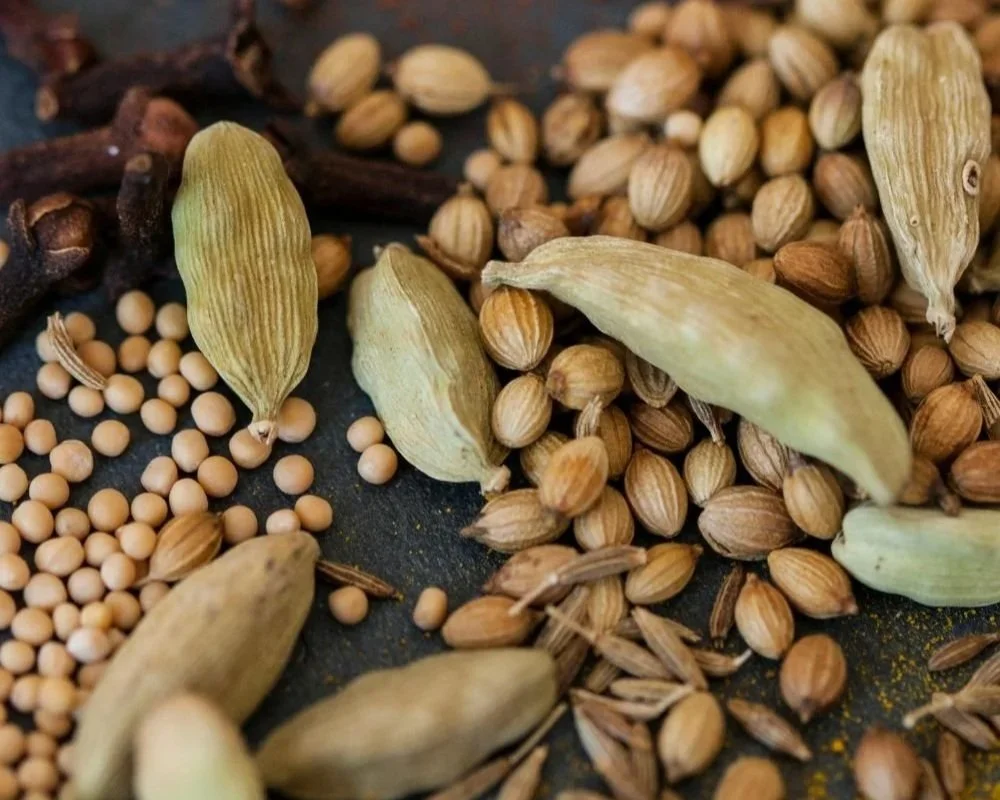
Image by Photo by Roman Savchenko on Unsplash
TL;DR
In summer, the body redirects energy away from digestion to keep itself cool. This is intelligent — but it means digestion needs gentle support.
The right spices do two things at once: keep digestion moving and help the body stay cool.
These seven — coriander, cardamom, fennel, cumin, fresh ginger, liquorice, and saffron — are the ones Ayurveda has relied on for thousands of years. Small additions to your daily cooking and drinks that add up over time.
Prefer to listen?
You can press play below to hear this episode of Rooted in the Seasons, or scroll down to read the blog post.
In summer, your digestive fire takes a step back.
Summer can leave the body feeling heavier than expected — sluggish digestion, low energy, a general sense of running on less. The body feels stiffer, the spark drops, and it can be hard to understand why when the season is supposed to feel good.
But our body is doing something intelligent here. When the heat rises, it redirects energy outward — to the surface, to cooling, to keeping you steady in the warmth. Digestion gets less of the body's resources as a result, and that is exactly how it is meant to work.
This is why summer calls for lighter meals, simpler cooking, and food that doesn't ask too much of the body to process. The digestive system is working less, and the food on your plate can reflect that.
Spices bridge the gap. The right ones keep digestion moving gently through the summer months — without adding to the heat the body is already managing. And this is where Ayurveda is quietly brilliant: the spices that support summer digestion are also the ones that help the body stay cool.
Nature tends to provide exactly what the season asks for.
🌱If you’d like a simple way to bring this into your day,
You can download my free guide:
5 Daily Ayurvedic Shifts to Feel Like Yourself Again
It walks you through how to apply this practically.
Here are the Best cooling spices for the summer:
Coriander

The best cooling spice
Coriander is one of the most useful spices you can reach for in summer.
Its cooling quality makes it particularly good for the digestive system and the bladder — calming inflammation and supporting the body during the heat. It supports the nervous system, strengthens the brain, and has a natural affinity with the eyes and the skin.
In Ayurvedic terms, coriander pacifies Pitta dosha — the dosha most likely to run high when the heat is up.
How to use it?
Add coriander seeds or powder to tempering for vegetables and dals. Stir it into your morning chai or coffee. Soak a teaspoon of coriander seeds in water overnight, strain, and drink in the morning — a simple way to address heat in the body before the day begins. Fresh coriander leaves work well stirred through soups, dals, or vegetable dishes at the end of cooking. For a quick cooling drink, blend fresh coriander with cucumber and a little ginger.
Cardamom

Did you know that cardamom is from the ginger family?
This surprises most people, given how different it tastes.
Its qualities are light, dry, and cool, which makes it one of the better spices for reducing Pitta.
The taste is a combination of sweet, pungent, and bitter, and between those three it covers a lot of ground: stimulating appetite, settling nausea, clearing foggy thinking, and freshening the breath. It is worth having in your bag when you travel.
Cardamom strengthens the heart, the spleen, and the digestive fire.
It also helps the body process milk. The mucousy quality of dairy is easier to digest when cardamom, turmeric, and ginger are added during heating. The same principle applies to heavy sweet dishes — a little cardamom powder in a cake or Indian sweet helps the body manage what would otherwise sit heavily.
It also works behind the scenes on two things many women, including me, love: tea and coffee. Cardamom neutralises the stimulating effects of caffeine, so the drink supports digestion without overstimulating the nervous system. It also reduces the acidity in both tea and coffee, protecting the mucous membranes from irritation. This is traditional herbal wisdom that has been used across Ayurveda and Middle Eastern cooking for thousands of years — and it is why cardamom belongs in your chai and coffee as much as in your cooking.
A note on black cardamom
Everything above applies to green cardamom, harvested before maturity. Black cardamom is larger, dried over fire, and carries a smoky flavour. It belongs in dals and meat dishes, tempered alongside stronger spices like cinnamon, cloves, and star anise. It is high in antioxidants and often found in Garam Masala.
How to use it?
Chew the seeds directly — as a mouth freshener, when your stomach feels squeezy or your mind sluggish. Add powder or opened pods to warm milk. Stir powder into baked goods or Indian sweets. Add opened pods to tempering for dals. And add it to your chai or coffee — for taste, yes, but also because it genuinely changes what that cup does in the body.
Fennel

Fennel is a comforting and balancing spice.
Fennel is comforting and balancing — and one of the few spices in Ayurveda that works for all three doshas.
This makes it very versatile. It enhances digestive fire without increasing heat, which is exactly what summer asks for.
Its qualities are cool, sweet, and soothing — so it supports digestion without aggravating Pitta, even when that dosha is already running high.
It reduces both Pitta and Vata, which makes it particularly useful for cramps and bloating — two things that can flare when digestion is sluggish or irregular.
Fennel also supports the nervous system and the mind. In Ayurveda, it is considered a sattvic herb — one that brings clarity and calm rather than stimulation. It nourishes the brain, plasma, and nerve tissues, which makes it more than just a digestive spice.
It eases lung congestion too. The aromatic properties help relax bronchial spasms, making it a gentle support for the respiratory system.
And like cardamom, fennel freshens the breath. Chewing roasted or raw fennel seeds after meals is an old Indian practice — it eliminates bad breath and promotes saliva flow, which itself supports digestion.
It also supports the spleen.
How to use it?
Add fennel seeds to tempering for vegetables, dals, soups, or stews.
Make it into tea on its own, or combine it with cumin and coriander for CCF tea — one of Ayurveda's simplest and most reliable digestive remedies.
Chew a few roasted seeds after meals.
Cumin
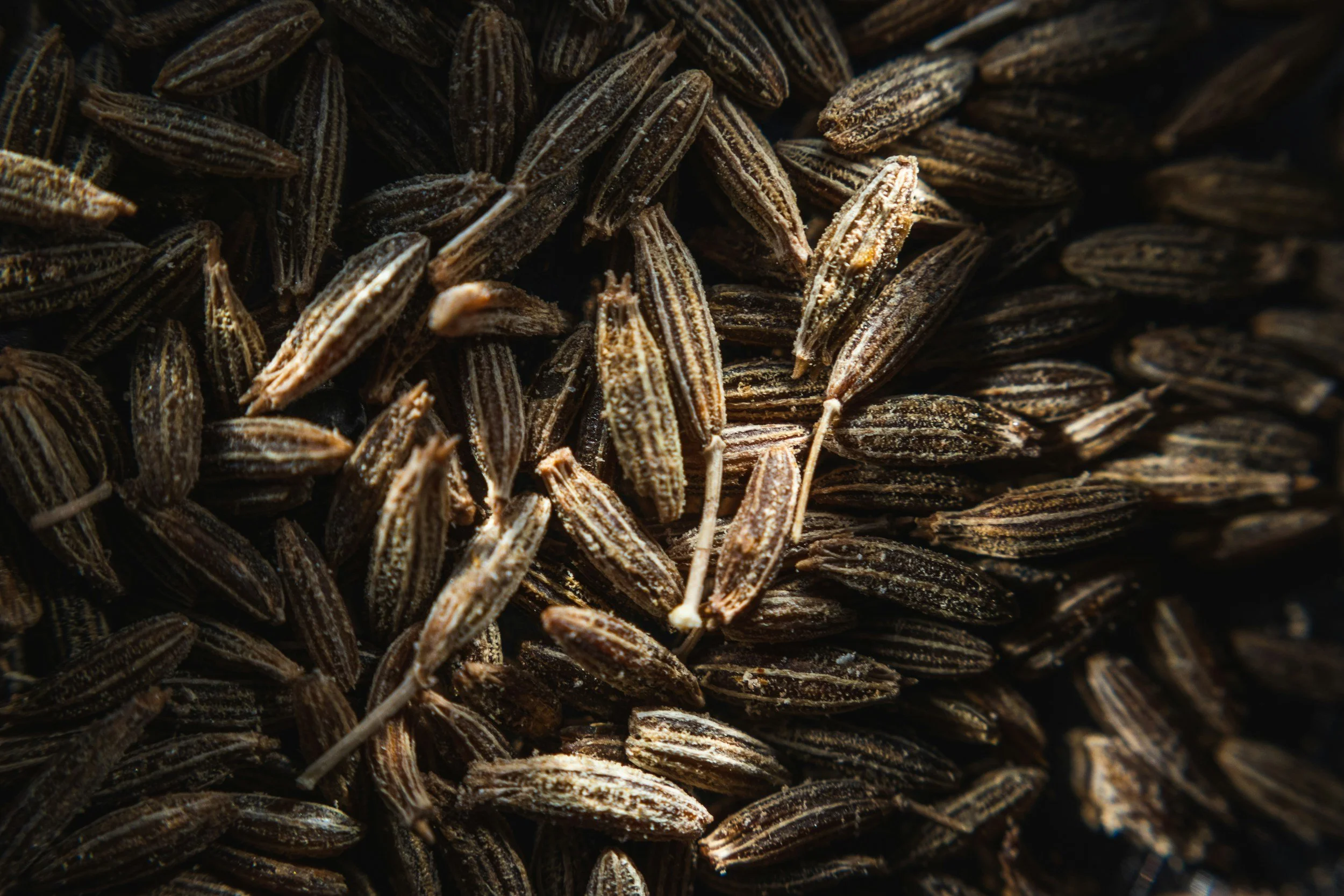
Cumin has light, hot, dry, and penetrating qualities.
Cumin is slightly more warming than fennel and coriander, which gives it a different role in summer cooking.
Its qualities are light, hot, dry, and penetrating, with bitter and pungent tastes. It stimulates digestion, helps regulate the microbiome, and cleans the blood — making it a reliable everyday spice rather than purely a cooling one
In Ayurveda, cumin is considered the antidote to potatoes. Nightshades are harder for the body to digest, but tempered in ghee with cumin, potatoes become both tastier and easier to process. The same applies to cabbage.
How to use it?
Add cumin to tempering with ghee for vegetables, dals, and soups.
Soak cumin seeds overnight — alone or with coriander — to draw out their digestive and diuretic properties (helps you to pee more). Drink the strained water in the morning.
Fresh Ginger

Ginger is one of the few absolutely must-have spices in your house.
Its effect on the digestive system is well established — for nausea, heaviness, bloating, colic, or low appetite, ginger tea works quickly.
Beyond digestion, it has blood-thinning properties, supports healthy cholesterol levels, and is beneficial in cases of bronchitis and asthma.
Ginger is also one of Ayurveda's best ama-burning herbs. Ama is the residue of half-digested food — material the body could not fully process. When digestive fire is weak, ama accumulates and deposits itself in the body's vulnerable spots over time. Ginger's heat helps to burn through it and support the body's natural detoxification.
Because ginger is heating, it is worth using in moderation — particularly if Pitta is already dominant. Fresh ginger is gentler than dried ginger powder.
How to use it?
Ginger tea, 1 slice of ginger per cup of water, boiled for a few minutes. Can be taken throughout the day or after food.
¾ tsp ginger juice plus a few drops of lemon juice before food to stimulate Agni, the digestive fire.
½ - ¾ tsp ginger juice with honey for cough or bronchitis.
Add freshly grated ginger to vegetable dishes, dals, soups, or leafy greens.
Liquorice
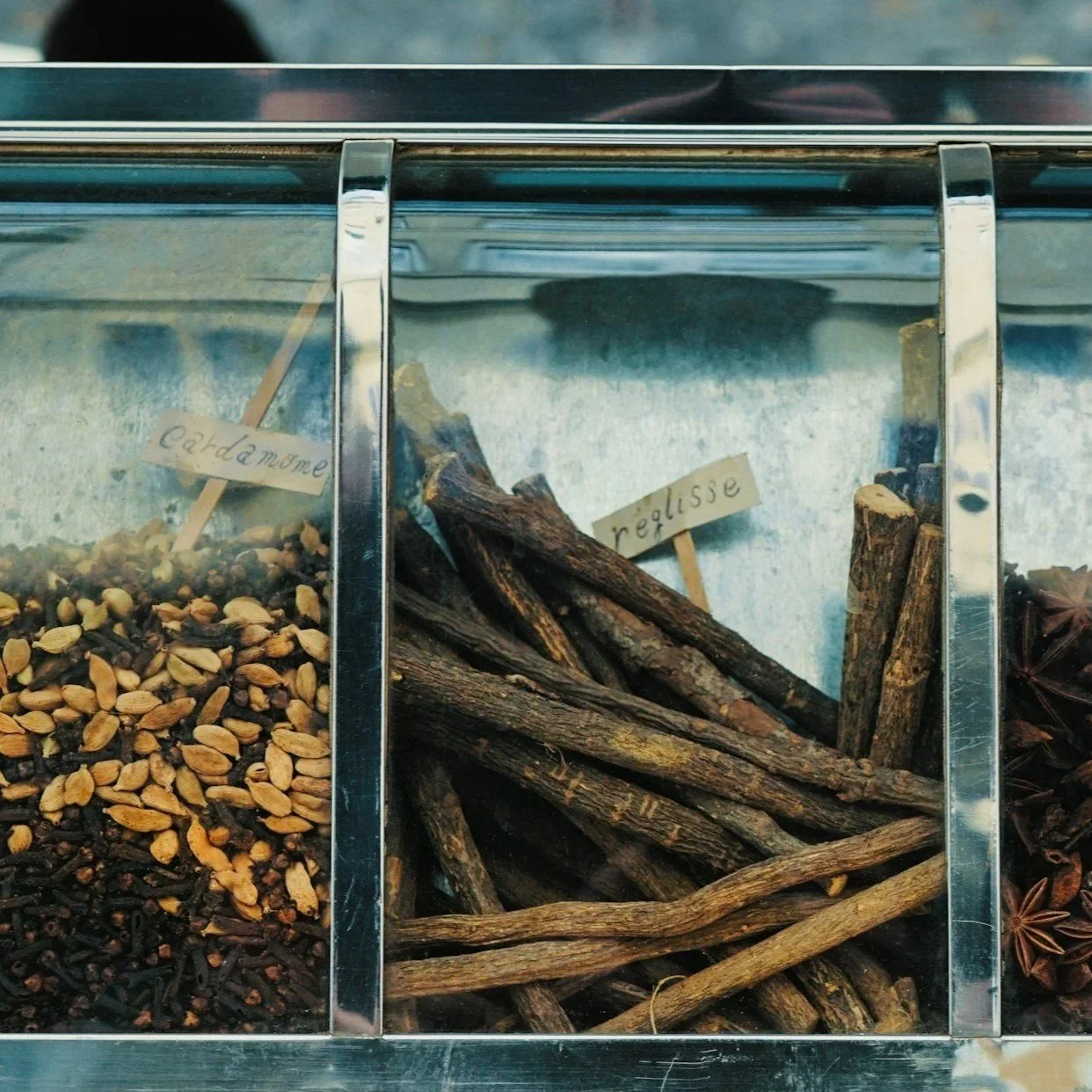
Did you know that liquorice is 50 times sweeter than sugar?
Its sweet taste makes it ideal for reducing Pitta, and its qualities go further than taste alone.
Liquorice moisturises the mucous membranes, supports the upper respiratory system, strengthens the lungs, relieves congestion, and promotes healthy breathing.
Its demulcent quality is particularly valuable in summer — it prevents the body from drying out in the heat.
It is also excellent for the voice. If you have a day of talking, teaching, singing, or chanting ahead, liquorice tea beforehand is a simple and effective way to prepare and protect the throat.
How to use it?
Liquorice works well as a tea: add ½ tsp liquorice powder to one cup of water, bring to a boil, simmer for ten minutes, then strain. A teaspoon of ginger added to the same pot works well — the two complement each other.
For Pitta constitutions managing summer heat, mix ½ tsp amla powder with ½ tsp liquorice powder in ghee or water.
Saffron

The most expensive spice in the world!
Saffron is the most expensive spice in the world — and in Ayurveda, one of the most extraordinary.
It is known as yogavahi, which means it forms a union with whatever it is taken alongside, enhancing the qualities of the other herbs or spices it meets. This makes it a catalyst rather than simply an ingredient.
Saffron strengthens the stomach and supports the digestive system. It reduces muscular spasms and inflammation, strengthens the heart, and helps with anaemia. It also has a cooling effect on the brain.
It has a strong affinity with the female reproductive system — regulating and promoting menstrual flow. Ayurveda also describes saffron as having aphrodisiac properties, and it appears in traditional texts as part of ceremonial preparations mixed with warm milk.
Used externally, saffron can be made into a paste to support skin conditions such as acne and eczema.
How to use it?
Saffron works beautifully in sweet dishes, rice, and tea.
Before using, soak the strands in a little warm water or milk. If you need it immediately, dry roast the strands briefly in a pan, allow to cool, then grind to a powder in a mortar and pestle.
A note on quality: genuine saffron costs around £ 8–10 per gram. If you find it significantly cheaper, it is unlikely to be the real thing.
Final Thoughts
Summer asks something different of the body.
The heat rises. The digestive fire steps back. The body is managing more than usual — and it does this quietly, without you having to do anything.
Spices are how you meet it halfway.
Working with what the season is already doing — keeping digestion moving gently, keeping the body cool, keeping things steady through the warmest months.
This is what Ayurveda has always understood. The kitchen is not separate from your wellbeing. What you reach for each day — the spices in your chai, the seeds in your tempering, the tea you make before bed — it all adds up.
Small choices. Made consistently. That is where the steadiness comes from.
“Enjoy these Ayurvedic remedies as part of your seasonal routine and notice the subtle yet significant ways they enhance your health and vitality.”
If you want to go further with this — building a way of eating that genuinely supports how you feel through the day — Cook to Feel Steady is a five-day food reset built around exactly this.
Simple food, Ayurvedic principles, and a rhythm your body can follow. You can find out more here.
Further Resources
Shifting into Summer with Ayurveda
How to Cool Pitta Dosha for Health and Happiness
Seasonal Eating - Summer Food Guide
Want a full Ayurvedic summer routine with cooling foods, lifestyle tips, and yoga guidance?
Read our seasonal guide: Stay Cool This Summer with Ayurveda and Yoga
FAQs
Why does digestion slow down in summer?
The body prioritises cooling in the heat, redirecting energy away from the digestive system to manage temperature. Digestion gets less resource as a result. This is why heavy meals feel harder to manage in summer — the body is simply working with less digestive capacity than usual.
Can I use these spices every day?
Yes — most of these spices are gentle enough for daily use. Ginger is the one to use in moderation, particularly if you run warm or if Pitta is dominant for you. Fresh ginger is gentler than dried ginger powder.
I already add cardamom to my chai — is that enough?
It is a great start. Cardamom in your chai neutralises the stimulating effects of caffeine and reduces acidity — so that one small habit is already doing more than you might realise. Adding coriander or fennel seeds to your cooking alongside it gives the body even more support through the season.
What is CCF tea and how do I make it?
CCF stands for cumin, coriander, and fennel — one of Ayurveda's simplest digestive remedies. Add a teaspoon of each to a litre of water, bring to a boil, simmer for ten minutes, strain, and sip through the day. It is particularly useful if digestion feels sluggish or bloating is a pattern in summer.
I do not cook with spices much — where do I start?
Coriander and fennel are the easiest entry points. Both are mild, versatile, and cooling. Add fennel seeds to tempering for any vegetable dish or dal, or make a simple fennel tea. Soak coriander seeds overnight and drink the strained water in the morning. Neither requires any change to how you already cook.
Is liquorice safe to use regularly?
In the amounts used in cooking and tea, liquorice is gentle and safe for most people. If you have high blood pressure or are on medication, it is worth checking with your GP before using it regularly in higher amounts.