Why Ayurveda Cares About When You Eat as Much as What You Eat
TL;DR
Digestion naturally changes throughout the day.
Ayurveda recommends lighter meals when Agni is gentler and a substantial lunch when digestive fire is strongest.
The seasons also influence what supports digestion best.
Working with these natural rhythms can support steadier energy, digestion and satisfaction after meals.
Prefer to listen?
You can press play below to hear this episode of Rooted in the Seasons, or scroll down to read the blog post.
Most conversations about healthy eating focus on what we should eat.
More vegetables.
More protein.
Less sugar.
Better fats.
Ayurveda agrees that food matters. At the same time, it asks another important question.
When is your body best able to receive that food?
That might sound like a strange question until you've experienced something like this.
It's 1 pm. There's one more email to answer, one more report to finish or, in my case, one more paragraph to write. Before you know it, it's 2.30 or even 3 pm. The strong appetite you had earlier has faded.
Instead of sitting down to a nourishing lunch, you grab something quick to keep you going. An hour later, you're hungry again. A biscuit with a cup of tea. A handful of nuts. Something else before dinner.
By the end of the day, you've eaten several times, yet you never really had the balanced meal your body was ready for. Those smaller snacks keep hunger at bay, but they rarely provide the same nourishment and satisfaction as a proper meal.
Ayurveda looks at this pattern a little differently. Rather than asking only what we ate, it also asks whether we missed the time when the body was naturally most ready to digest a nourishing meal.
🌱If you’d like a simple way to bring this into your day,
You can download my free guide:
5 Daily Ayurvedic Shifts to Feel Like Yourself Again
It walks you through how to apply this practically.
Your digestive fire changes throughout the day
Our digestive capacity isn't the same throughout the day. Just as the sun rises, reaches its highest point, and gradually sets again, our digestive fire, known as Agni, follows a natural rhythm.
When we begin to recognise that rhythm, many of Ayurveda's recommendations start to make much more sense.
In Ayurveda, each part of the day is influenced by different doshas. These changing qualities affect how the body functions, including digestion.
Morning: a slower beginning
The morning, between 6.00 and 10.00 am, carries the qualities of Kapha dosha: steady, cool and heavy.
After a night's sleep, digestion is still waking up. A warm, lighter breakfast is easier to digest. Depending on your constitution and the season, grains such as oats, barley, millet or amaranth can work well.
This doesn't mean skipping breakfast. It means choosing foods that support digestion rather than asking too much of it too early.
Midday: when Agni is strongest
Around lunchtime, Pitta dosha becomes dominant.
Just as the sun reaches its highest point, digestive fire is also at its strongest. This is why Ayurveda traditionally recommends making lunch the main meal of the day.
Eating the main meal when Agni is naturally strongest works with the body's natural digestive strength. Digestion becomes more efficient, and a nourishing lunch gives the body the fuel it needs for the afternoon. Many people notice steadier energy throughout the afternoon and are less likely to experience the familiar 3 or 4 pm energy slump.
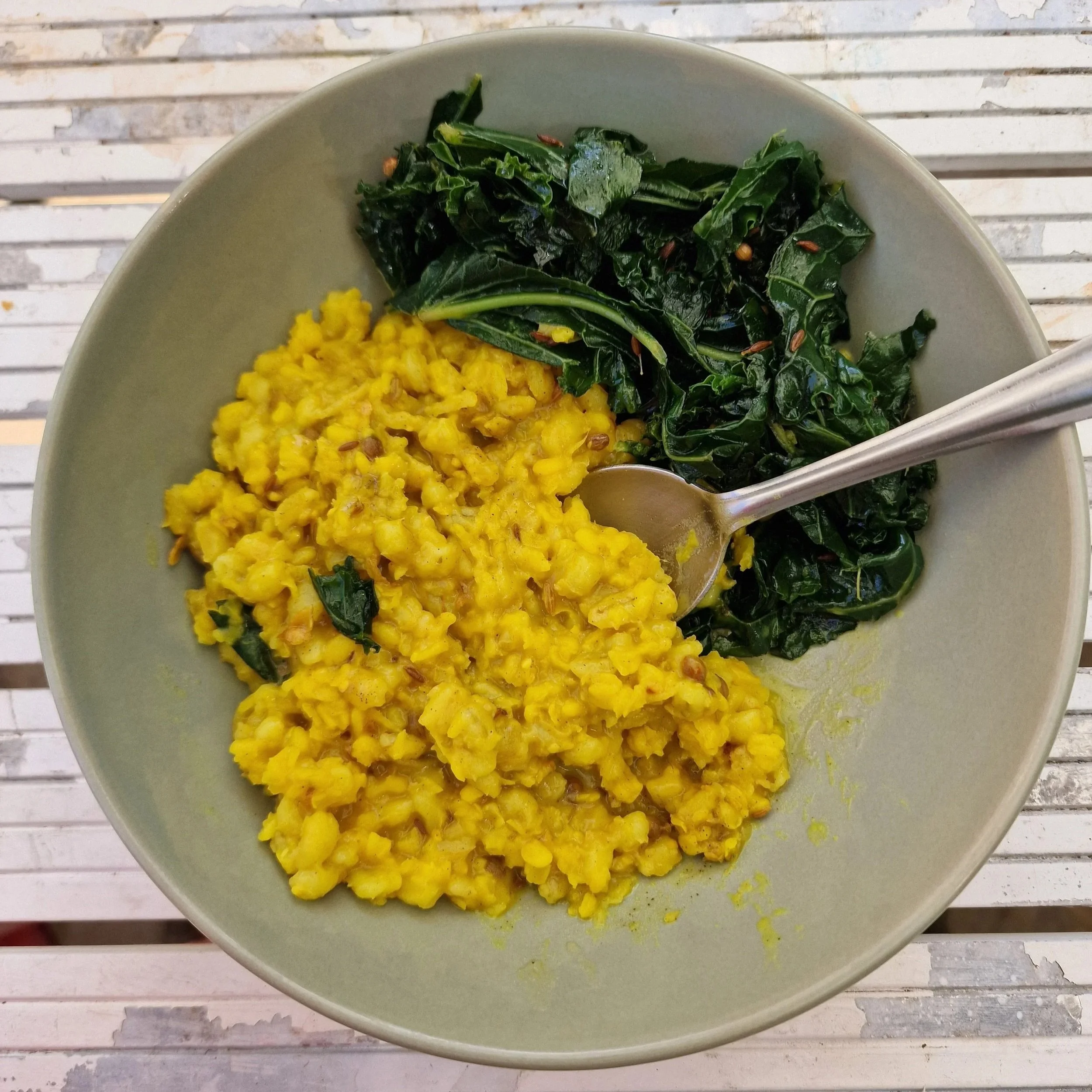
If you usually eat a raw salad for lunch, experiment with a warm version instead. Steam your seasonal vegetables, add barley or quinoa, fresh herbs and a simple dressing. The meal still feels light and colourful, while the cooked vegetables are easier for the body to digest. Notice how your energy feels through the afternoon and whether you stay satisfied for longer.
Evening: preparing for rest
As the day comes to an end, digestion gradually begins to slow again.
A lighter evening meal gives the body time to digest before sleep, leaving more energy for overnight repair and restoration. A simple meal built around vegetables and a source of protein is often all the body needs. Protein supports the body's overnight repair processes and helps you feel satisfied, making it easier to finish the meal feeling comfortably full.
Many people notice they wake feeling lighter and more refreshed when dinner is simple and eaten early enough.
The seasons add another layer
The time of day is only part of the picture.
Ayurveda also considers the season.
During spring, Kapha qualities are naturally more prominent. Morning already carries Kapha qualities, so a warm, light breakfast with warming spices such as ginger supports digestion. Grains like barley, rye and amaranth work particularly well during this time of year.
During summer, Pitta is naturally more active. Lunchtime remains the strongest time for digestion, while seasonal foods become lighter, more hydrating and cooling. A bowl of steamed seasonal vegetables with quinoa or barley, leafy greens and a coriander-mint chutney makes a nourishing summer lunch.
During autumn, Vata qualities become more prominent. Warm, cooked nourishing meals with healthy fats and grounding spices help support digestion as the weather becomes cooler, drier and more changeable. We naturally begin to enjoy warming meals such as root vegetables, hearty stews and soups that provide grounding and nourishment as the weather becomes cooler and drier.
During winter, Kapha begins to build again. Nourishing, warming meals and digestive spices help maintain Agni during the colder months.
Rather than changing everything with each season, Ayurveda makes small adjustments that allow our meals to reflect what nature is already offering.
Ancient wisdom, modern science
Modern research into circadian rhythms continues to show just how many processes in the body follow a daily cycle. Hormones, body temperature, alertness and digestion all change across the day.
Ayurveda has observed these natural rhythms for thousands of years. Rather than trying to override them, it encourages us to work with them.
Final Thoughts
Many people are surprised to learn that Ayurveda doesn't only look at nutrients. It also considers timing, rhythm and the body's changing needs throughout the day and across the seasons.
When we begin to work with those natural rhythms, eating often feels simpler. Digestion becomes steadier, energy feels more consistent, and meals start to support the body rather than compete with it.
This week, notice your own rhythm.
When does your appetite naturally feel strongest?
How do you feel after a substantial lunch compared with a substantial dinner?
Sometimes the body is already giving us the answers. We simply need to pause long enough to notice.
Want to put this into practice?
Understanding when to eat is one thing. Experiencing how it changes your energy and digestion is another.
Cook to Feel Steady guides you through five days of simple seasonal meals, helping you experience how meal timing, balanced nourishment and Ayurvedic principles work together. The decisions are already made, giving you the space to notice how your body responds.
→Find out more about Cook to Feel Steady.
FAQs
Do I have to eat lunch exactly at midday?
No. Ayurveda isn't about perfection. The aim is to enjoy your main meal during the middle part of the day, when digestive fire is naturally strongest. Small shifts often make a noticeable difference.
Can I still eat a salad for lunch?
Absolutely. If you enjoy salads, try gently steaming the vegetables or adding cooked grains such as barley or quinoa. Many people find a warm lunch more satisfying and easier to digest.
What if I'm not hungry in the morning?
Appetite varies from person to person. Rather than forcing a large breakfast, choose something warm and light that feels comfortable for your digestion, and notice how your body responds over the next few hours.