Manipura Chakra: How to Turn Intention into Action
updated July 2026
TL;DR
Manipura is the third chakra, located around the navel, and is associated with the fire element.
It teaches us how to turn intention into action, transforming food into energy and ideas into purposeful living.
Yoga, breathwork, affirmations and daily habits can help strengthen this centre of confidence, clarity and transformation. We often begin the day with good intentions. Manipura shows us how to turn those intentions into action
Prefer to listen?
You can press play below to hear this episode of Rooted in the Seasons, or scroll down to read the blog post.
This week, we continue our journey through the chakra system and move up to the navel area, where we find the Manipura chakra.
First, though, let's briefly look back at Mooladhara and Swadhisthana. Each chakra builds on the one before it, creating the foundation for the next step in our journey.
From Physical to Emotional: The Path to the Manipura Chakra
We come from the depth of our pelvis, the base of the spine, from the Mooladhara chakra, governing our physical life, body and health, maintaining this body, our home, and family.
From there, we move a little higher, still within the realm of the pelvis, to the Swadhisthana chakra, which is all about our emotional life, relationships near and far, and the fears surrounding those relationships.
You can already see the journey from gross to subtle beginning to unfold.
As we continue travelling up the spine, our awareness expands with us. We now arrive at the Manipura chakra, where intention begins to turn into action.
🌱Intention becomes much easier to act on when you have a few daily anchors that you can return to consistently.
You can download my free guide:
5 Daily Ayurvedic Shifts to Feel Like Yourself Again
It walks you through how to apply this practically.
The City of Jewels: Discovering the Power of the Solar Plexus
We arrive at the city of jewels, the Manipura chakra, at the solar plexus around the navel.
Interestingly, the location of each chakra coincides with a major nerve plexus in the body.
This is where the journey takes an important turn. Stability and emotions have created the foundation. Manipura asks a new question: how do we begin living from what truly matters to us?
Kundalini Awakening: Hatha Yoga's Role in Chakra Energisation
The primary energy sits dormant in our pelvis as Kundalini Shakti. One of the aims of Hatha Yoga is to awaken this energy so that it gradually rises from the base of the spine through each chakra, bringing awareness and vitality to every aspect of our lives.
As this energy rises, so does our consciousness. We move from meeting our basic needs, through our emotional world, towards living with greater intention and purpose. Ultimately, the journey leads to our highest spiritual potential, represented by the crown chakra.
Transformation Through Fire: The Role of the Manipura in Personal Growth
The Manipura chakra is the centre of transformation. Its element is fire, which transforms, metabolises and absorbs. In Ayurveda, fire transforms food into energy. In the same way, Manipura helps us transform our intentions into purposeful action.
Think about the stages of a child's development.
A baby's world revolves around meeting its immediate needs. As children grow, their awareness gradually expands. They begin to notice other people, learn to share, build friendships and understand that they are part of something bigger than themselves.
Our consciousness continues to expand throughout life.
This expansion doesn't happen by accident. It is supported by the fire element, which naturally transforms whatever it touches. Fire creates warmth, movement and transformation.
In the body, fire transforms food into energy. Within us, it transforms intention into action. It gives us the courage to make decisions, the energy to follow through and the confidence to live in alignment with what truly matters.
Decoding the Symbols: The Red Triangle and Ten Blue Petals
The location of the Manipura chakra is in the navel region, where our digestion is at home.

When you look at the lotus, you'll notice the red triangle pointing upwards. It represents the fire element and the transformative energy of this chakra.
The red triangle is surrounded by ten blue lotus petals, each representing one of the Sanskrit seed sounds:
ḍa, ḍha, ṇa, ta, tha, da, dha, na, pa, and pha
Its Bija mantra is RAM, a sound traditionally associated with fire. Chanting RAM generates warmth, supporting the transformative quality of the Manipura chakra.
Take a moment to experience the Bija mantra yourself. Find a comfortable seated position, place one hand over your navel and chant OM RAM several times. Notice the vibration, the warmth it creates and any sensations that arise around your centre. Afterwards, sit quietly for a minute or two and simply observe how you feel.
Chant with me:
Notice how beautifully Yoga and Ayurveda complement one another. The fire element corresponds with Pitta dosha. While Pitta's main seat is the small intestine, it is also associated with the eyes and our sense of sight.
Manipura is the centre of vitality, transformation and purposeful action. Here we digest food, thoughts and experiences, turning them into energy we can use in our daily lives.
As our inner fire becomes steadier, we gain the clarity to recognise what matters, the courage to make decisions and the energy to act on them.
Manipura is also linked to our sense of identity and how we use our personal power. When balanced, it supports confidence, courage and purposeful action. When out of balance, it may express itself through anger, control, aggression or the need for recognition.
At this stage of the journey, the dominant guna gradually shifts from tamas towards rajas. The gunas describe the different qualities of energy that shape our thoughts, emotions and behaviour. The grounding energy of Mooladhara and the instinctive responses of Swadhisthana create the foundation from which purposeful action can emerge.
When Manipura is balanced, we experience warmth, enthusiasm, courage and the willingness to use our energy in service of something beyond ourselves.
Deity of the Manipura Chakra
The Bija mantra RAM is also the mantra of Shri Rama, one of Lord Vishnu's incarnations. Chanting RAM is traditionally said to dispel fear and cultivate courage.
My teacher often said that fear is cold. Even when we sweat because of fear, we call it a "cold sweat". When we feel cold, we are often more vulnerable to anxiety and fear. By generating warmth through chanting OM RAM, we invite courage, confidence and purposeful action.
Just as balanced Pitta gives us clarity, warmth and healthy digestion, an imbalanced Pitta may express itself through anger, irritability and aggression. Once again, Yoga and Ayurveda describe the same experience through different lenses.
The more you learn, the more you see how everything ties together.
Here's something to explore.
When you look closely at the sounds within a mantra, such as the Gayatri Mantra, you can begin to recognise which chakras those sounds relate to by comparing them with the Sanskrit sounds found on each lotus.
We'll leave that journey for another day.
Practical Chakra Work: Affirmations and Journaling for the Manipura
As with the other chakras, you can use affirmations to connect to the chakra’s energy. For the Manipura chakra, you can use
I act with courage and purpose.
I trust myself to make wise decisions.
My actions reflect what truly matters to me.
I have the energy to follow through on my intentions.
I am radiant like the sun.
Choose the affirmation that resonates most with you today. Repeat it for a minute or two, then notice what thoughts, feelings or resistance arise. Your journal can help you explore what supports your intentions and what repeatedly pulls you away from them.
Fire brings light. Journaling helps bring unconscious thoughts and habits into that light, making them easier to recognise and transform.
Ask yourself: What is one action that would bring that intention to life?
Yoga and Breathing: Physical Practices for Chakra Activation
Yoga and breathing practices help us experience the qualities of the Manipura chakra in the body. As we build warmth, stability and awareness, we also strengthen our ability to act with intention.
Yoga postures (asanas)
Your daily yoga practice can become a simple way to connect with the Manipura chakra. These postures are a good place to begin:

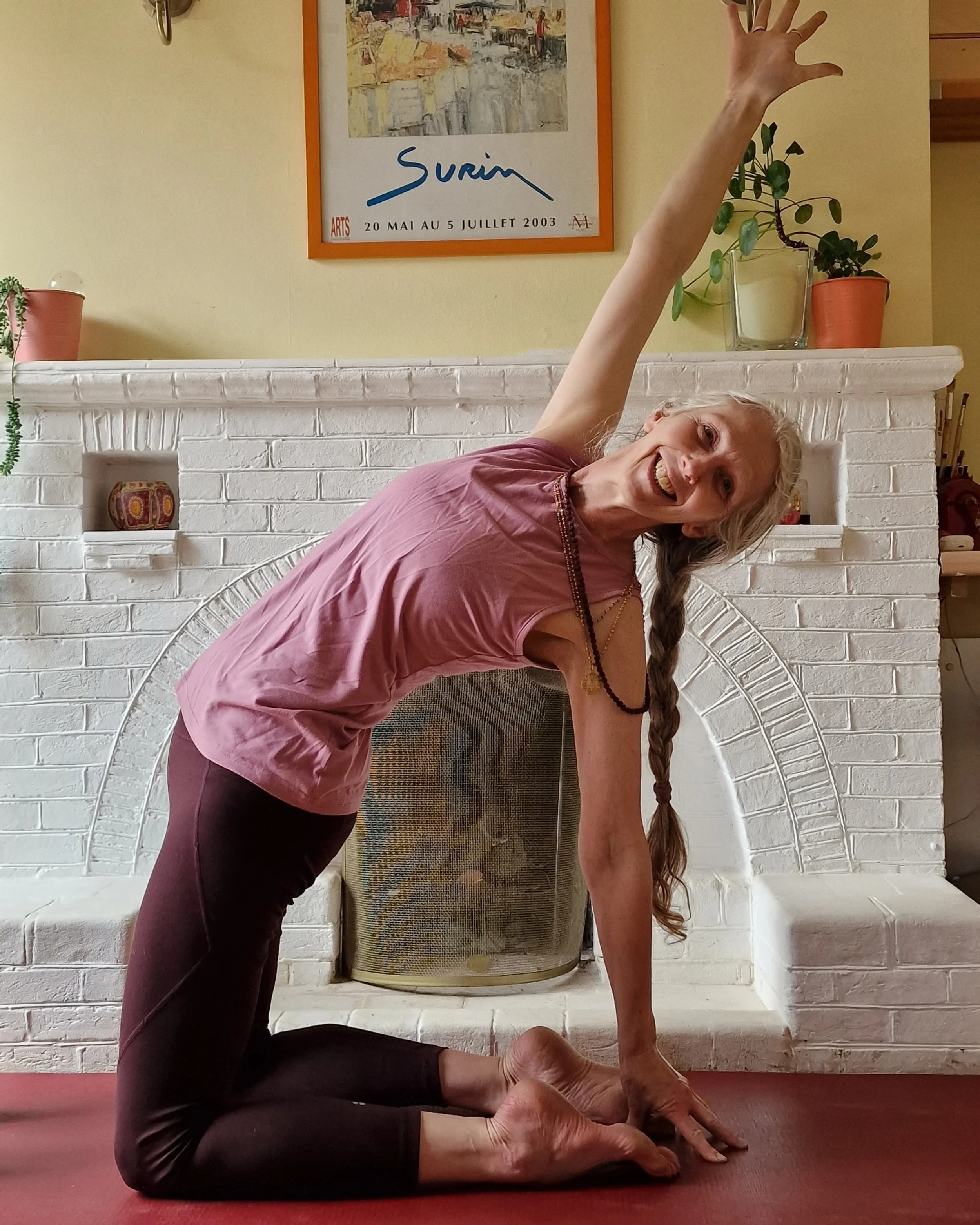
Twists
Standing, seated or supine twists stimulate the digestive organs and bring awareness to the navel centre. As you practise, visualise the red triangle of the Manipura chakra radiating warmth from your centre.
Backbends
Backbends open the front of the body, encouraging confidence, openness and vitality. Cobra (Bhujangasana), Locust (Shalabhasana), Bow (Dhanurasana), Camel (Ustrasana) and Upward Facing Dog are all wonderful choices.
Surya Namaskar
Surya Namaskar beautifully combines movement, breath and warmth, making it one of the most complete practices for supporting Manipura. It also reminds us that every chakra works together as part of one integrated system.
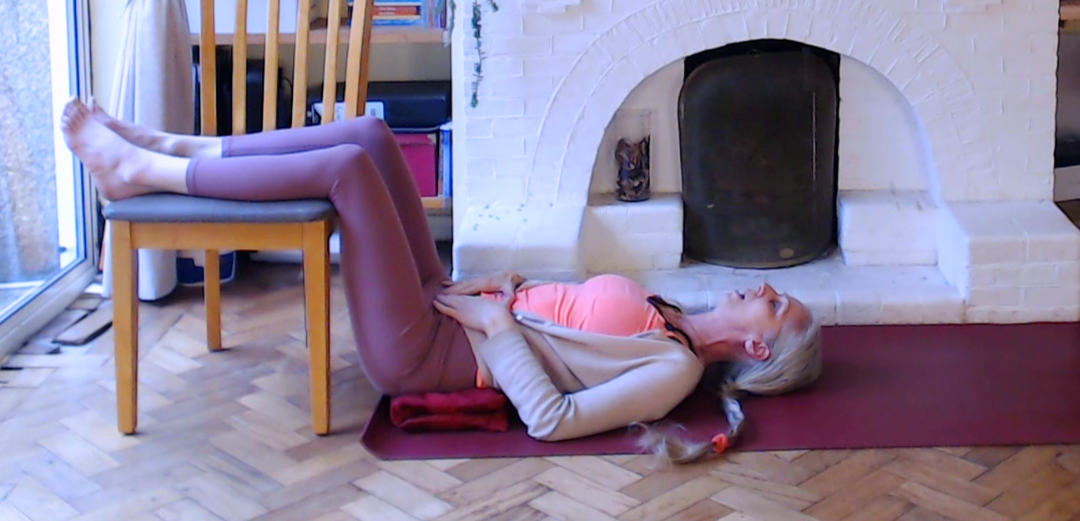
Inversions
Inversions support our digestive fire by directing Agni towards the intestines. As the flame always rises upwards, changing our orientation allows the digestive fire to move towards the bowels, traditionally supporting digestion and helping to relieve constipation.
A simple way to experience this is Legs Up the Wall (Viparita Karani) with the pelvis slightly elevated on a folded blanket or cushion. More experienced practitioners may also enjoy Shoulder Stand (Sarvangasana). When the gross channels, such as the digestive tract, flow more freely, the finer energy channels can do the same.
Breathing Practices
Bhastrika is often called the Breath of Fire because of the warmth and vitality it generates throughout the body.
Kapalabhati – skull shining, also benefits the Manipura chakra because we need to draw back the navel strongly and suddenly, directly affecting the area of the chakra. Kapalabhati can be tricky to learn, check this tutorial video with easily accessible steps
Surya Bhedana – alternate nostril breathing but only inhaling through the right nostril and exhaling through the left. It creates warmth in the body by stimulating Pingala nadi, one of the main energy channels, which moves through each chakra. It is associated with the left side of our brain, the right side of our body, and the extrovert, warm, active side of our personality.
Please practice all techniques under the guidance of an experienced Yoga teacher.
The strength of Manipura doesn't come from practising perfectly. It grows through small, consistent actions. Every nourishing meal, every conscious breath and every time you follow through on an intention strengthens this centre of transformation.
Final Thoughts
The Manipura chakra reminds us that transformation begins within. As the centre of the fire element, it teaches us how to turn intention into action, nourishing both body and mind along the way.
Throughout this journey, we've explored the symbolism of the Manipura chakra, the meaning of the Bija mantra RAM, its connection with Agni and Pitta, and the role of Yoga and Ayurveda in supporting this centre. We've also looked at practical ways to work with Manipura through affirmations, journaling, yoga and breathing practices.
Perhaps the greatest lesson of Manipura is that meaningful change grows through the small choices we make every day. Each nourishing meal, conscious breath and intentional action strengthens the inner fire that helps us live with greater clarity, courage and purpose.
A meaningful life isn't shaped by good intentions alone. It's shaped by the actions that follow.
Continue Your Chakra Journey
Where we began
Mooladhara lays the foundation of physical life: the body, food, shelter, safety and belonging.
→ Explore the Mooladhara (Root) Chakra
Where we moved next
Swadhisthana introduces our emotional world: relationships, creativity, pleasure and our ability to move with change.
→ Explore the Swadhisthana chakra
Where we are now
Manipura transforms intention into action. It teaches us how to use our inner fire to make purposeful decisions, follow through on what matters and live with greater courage and clarity.
Where we go next
Next week we arrive at Anahata, the heart chakra, where our awareness expands beyond ourselves into compassion, connection and love.
Continue Exploring Your Rhythm
Living with intention doesn't happen through motivation alone. It grows through the small choices we repeat every day.
This is the heart of Back to Rhythm, my 12-week programme for restoring steady energy, digestion and emotional balance through simple daily and seasonal rhythms.
If you'd like to build habits that reflect what truly matters to you, I'd love to invite you to join the Back to Rhythm list.
You'll receive practical reflections, programme updates and be the first to hear when the September group opens.
→ Join the Back to Rhythm list
FAQs
What is the Manipura chakra responsible for?
The Manipura chakra is associated with transformation, personal power and purposeful action. In Yoga and Ayurveda it is linked with the fire element, helping us digest not only food but also thoughts, experiences and the energy needed to act on what truly matters.
How do I know if my Manipura chakra is out of balance?
An imbalanced Manipura chakra may show up as low motivation, difficulty making decisions, a lack of confidence, or the opposite—anger, frustration or the need to control. Working with yoga, breathing practices, daily routines and supportive Ayurvedic habits can help restore balance over time.
Which yoga practices support the Manipura chakra?
Practices that generate warmth and awaken the navel centre are traditionally associated with Manipura. Twists, backbends, Surya Namaskar, gentle inversions and breathing techniques such as Bhastrika, Kapalabhati and Surya Bhedana all help cultivate the qualities of this chakra.