Ayurvedic Lentil Pancakes — Kitchadi in Pancake Form
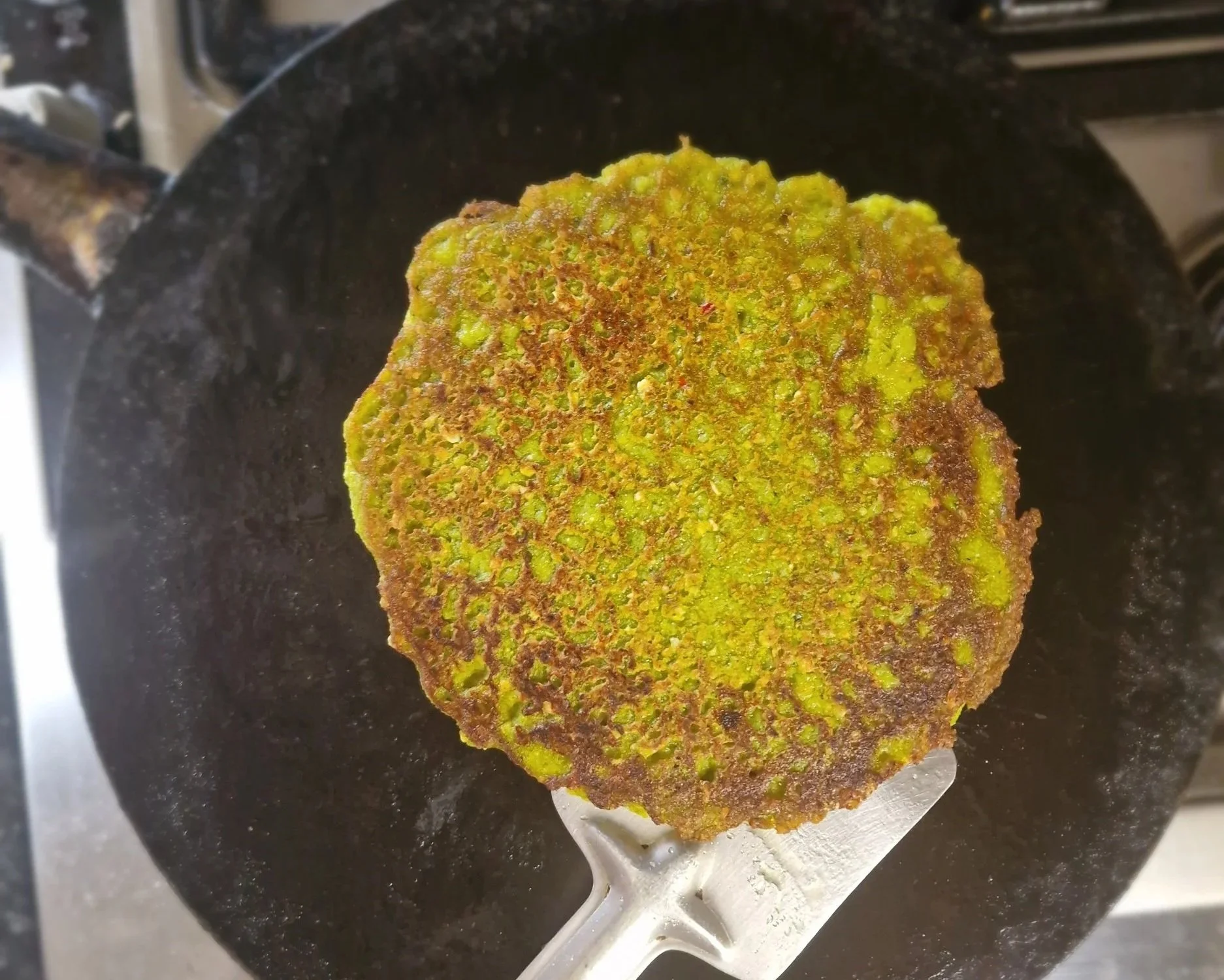
If you prefer something savoury and want a higher-protein breakfast, lentil pancakes are a great option The combination of protein and carbohydrate makes them substantial enough to carry you through the morning and helps keep your energy steadier.
Now, protein pancakes may sound like a modern invention, but Ayurveda was onto this many moons ago.
Mung dal is a favourite in Ayurvedic cooking. It is high in protein and easier to digest than many other pulses. Red lentils are another good option and have a slightly more warming quality.
You can also combine equal parts mung dal and rice. Together, the dal and rice provide a more complete protein profile while making the pancakes a little more nourishing and substantial.
Ingredients
Serves 2
1 cup split yellow mung dal or red lentils
or½ cup split yellow mung dal + ½ cup rice
½–¾ cup water, as needed
½ inch fresh ginger
1 tsp cumin seeds
¼ tsp turmeric
Salt to taste
Ghee or oil for cooking
Optional: a little fresh chilli
Optional: finely grated carrot or courgette, chopped spinach or fresh herbs
How to make it
Wash the dal thoroughly. If using mung dal and rice, wash them together.
Place in your blender or food-processor bowl, add ½ cup fresh water and leave to soak overnight.
In the morning, add the ginger, cumin seeds and salt, then blend until smooth.
Add a little more water if needed to create a smooth, pourable pancake batter.
Stir in the turmeric after blending, along with any chilli, vegetables or herbs you are using.
Heat a little ghee or oil in a frying pan over medium heat.
Pour in a ladleful of batter and spread it into a thin circle.
Cook for about 2–3 minutes, until the surface begins to set and the underside is golden.
Flip and cook the other side for another 1–2 minutes, until cooked through.
Repeat with the remaining batter, adding a little more ghee or oil to the pan as needed.
Serve warm.
Kitchadi in pancake form: Use ½ cup mung dal and ½ cup rice. Together, the dal and rice provide a more complete protein profile and make the pancakes a little more nourishing and substantial.
Make the morning easier: Wash everything and set it to soak in your blender or food-processor bowl the night before. In the morning, you only need to add the spices, blitz the batter and heat the pan. Any remaining batter can be kept in the fridge for another breakfast or a quick lunch.
Looking for more autumn breakfast ideas?
→ 5 Warm Breakfast Suggestions for Autumn
🌿 Feeling good after this meal?
If you’re here because your digestion feels a little off…
or your energy isn’t quite where you want it to be…
👉 Start here: Free Guide: 5 Ayurvedic Shifts to Feel Better This Week
It’s simple, practical, and helps you build a rhythm around your meals — not just recipes.